Places · Richmond Hill, Ontario
Published
Saigeon Trail restoration: why Richmond Hill’s forest is changing
Saigeon Trail’s forest has been affected by emerald ash borer and invasive plants. The city’s multi-year restoration removes hazards and invasive growth and adds native trees and shrubs.
Facts checked
In this story
A forest does not come with a maintenance receipt
On a familiar trail, a newly open patch of sky can feel like somebody has taken a room away. The trees were there, then they were not, and the route you thought you knew suddenly looks exposed. At Saigeon Trail, that change belongs to a longer struggle with emerald ash borer, dead trees and invasive plants.
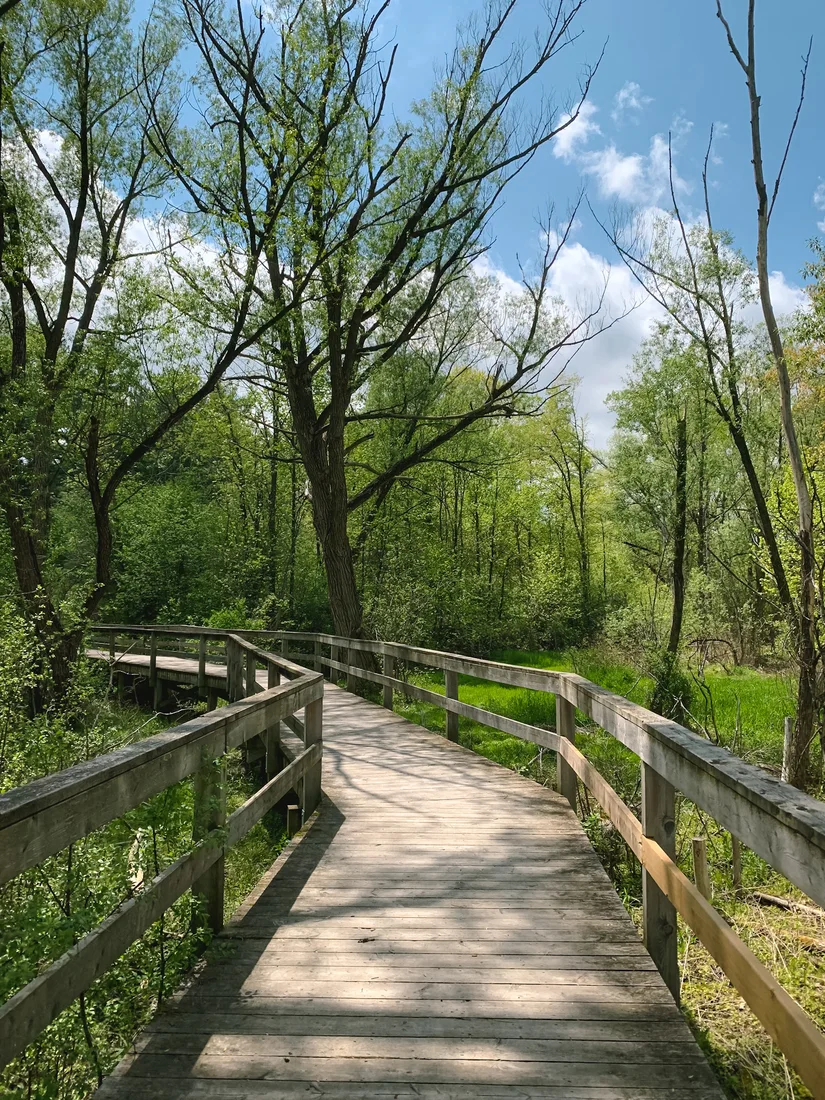
Saigeon is both an urban woodland and an everyday route through neighbourhoods. Its restoration therefore has two audiences: people watching the canopy change and people needing the path to get somewhere. The city is trying to restore a diverse forest while maintaining that recreational use. The awkward middle stage, with lost shade and young planting, is part of what walkers encounter now.
Source: Residents ask about Bond Lake and Saigeon forest history, April 2023
Source: Residents share Saigeon autumn photographs, October 2026
Source: City: emerald ash borer and Saigeon restoration
The insect that changed the canopy
The city identifies emerald ash borer as the cause of dead and declining ash trees along Saigeon. Those damaged trees can become hazards, while the openings they leave create opportunities for invasive plants. Removing an unsafe trunk is only the visible first part of the problem. What grows into the space matters just as much.
The restoration programme runs across several years, from 2022 to 2026. It combines removing dead or hazardous trees, controlling invasive growth and planting native trees and shrubs. The city’s page reports more than two thousand new plantings across the project. That is real investment in a future canopy, although a new sapling is not a mature tree wearing a smaller coat.
Source: City: emerald ash borer and Saigeon restoration
Why the messy stage matters
The programme includes invasive-plant treatment, further planting and monitoring in 2026. That helps explain why restoration can look unfinished long after a conspicuous removal. A woodland does not recover on the timetable of a kitchen renovation, and even kitchen renovations have been known to test a household’s grasp of the word temporary.
The benefit is a better chance for a healthier, more varied next generation of vegetation. The cost is a period when the place looks changed, work interrupts the route and established shade is lost. It is reasonable for residents to miss the old appearance while recognising why unsafe trees and invasive competition need attention. Both observations describe the same landscape.
Source: City: emerald ash borer and Saigeon restoration
A neighbourhood connection as well as a view
Saigeon also matters because people use it to get somewhere. Older regional cycling conversations mention it among local connections, rather than treating every green route as a special excursion. That everyday role makes interruptions more noticeable: a familiar stretch may be part of a school run, a regular walk or a link between neighbourhood streets.
Conditions and access can change as restoration work continues. The city includes Saigeon among trails mapped through AccessNow, giving visitors a way to examine particular routes and entrances rather than rely on the broad description that a trail is easy. Use current signs around work areas and choose the route that suits your own needs.
Source: Cyclists discuss Richmond Hill connections, June 2023
Source: City: parks, trails and natural areas
What to look for on the next walk
The interesting question is not simply how many trees have disappeared. Look for the different ages of vegetation, the planted areas and the work to prevent one aggressive species filling every opening. Follow barriers around active work and keep to the route. Young planting needs time and protection more than it needs a close-up reached by stepping off the path.
A restored forest is a promise made well ahead of the payoff. The people planting it may never see it at its most impressive, and today’s walkers have to live with the awkward middle. That is part of the story of Saigeon now: a place people care about enough to notice its losses, and a future canopy being given a chance to arrive.
Source: City: emerald ash borer and Saigeon restoration
Source: City: parks, trails and natural areas
Dead wood and failed restoration are not the same thing
A woodland can contain fallen logs without being neglected. The city's ash-management explanation notes that woody debris can recycle nutrients and provide habitat. That is different from leaving a hazardous standing tree beside a busy route. The decision is about location and ecological role, rather than a simple rule that tidy means healthy.
Saigeon's restoration therefore works at several speeds. Hazard removal changes the view quickly. Invasive control makes room for other plants. New trees and shrubs need years to become the canopy people miss. The city reports more than two thousand plantings, but counting them is only part of the story. Establishment and monitoring determine whether the next forest has a chance to become more diverse than the one the beetle damaged.
Source: City: emerald ash borer and Saigeon restoration
Places in this story
Saigeon Trail
Tower Hill Road, Richmond Hill, ON
Neighbourhood trail and forest corridor undergoing ash-borer restoration.
Source: City: parks, trails and natural areas
More place details
Source: Compare these places in Resources
Source: Residents ask about Bond Lake and Saigeon forest history, April 2023
Questions people ask
Why have trees been removed along Saigeon Trail?
The city identifies dead and hazardous ash trees affected by emerald ash borer among the restoration issues.
Source: City: emerald ash borer and Saigeon restoration
What is emerald ash borer?
It is an invasive insect that damages ash trees and has affected Richmond Hill’s urban forest.
Source: City: emerald ash borer and Saigeon restoration
When does the restoration programme run?
The city describes a multi-year Saigeon programme from 2022 to 2026.
Source: City: emerald ash borer and Saigeon restoration
Are new trees being planted?
Yes. The city describes native tree and shrub planting, with more than two thousand plantings reported across the work.
Source: City: emerald ash borer and Saigeon restoration
Why not just remove the dead trees?
The programme also tackles invasive plants and establishes native growth to improve the woodland’s recovery.
Source: City: emerald ash borer and Saigeon restoration
Is invasive-plant work continuing in 2026?
The city includes treatment, planting and monitoring in its 2026 work.
Source: City: emerald ash borer and Saigeon restoration
Does a planted sapling replace mature shade immediately?
No. The planting supports future recovery; the loss of mature canopy remains noticeable while young vegetation grows.
Source: City: emerald ash borer and Saigeon restoration
Where can I research route accessibility?
The city lists Saigeon among trails mapped through AccessNow. Check the specific route and entrance for your needs.
Source: City: parks, trails and natural areas
Can an old closure notice tell me what is closed today?
Not reliably. Use current city notices and signs at the entrance rather than assuming an undated or older notice still applies.
Source: City: parks, trails and natural areas
Should I leave the trail to inspect restoration planting?
Respect posted barriers and planted areas. Stay on permitted routes so new vegetation and active work are not disturbed.
Something changed? Tell us about a correction.