Places · Richmond Hill, Ontario
Published
Bond Lake’s amusement-park past: railway outings and today’s conservation rules
Bond Lake was once a railway-linked pleasure ground with a carousel, dancing and water activities. Today it is conservation land, with strict activity rules and Sunday parking closures from October to March.
Facts checked
In this story
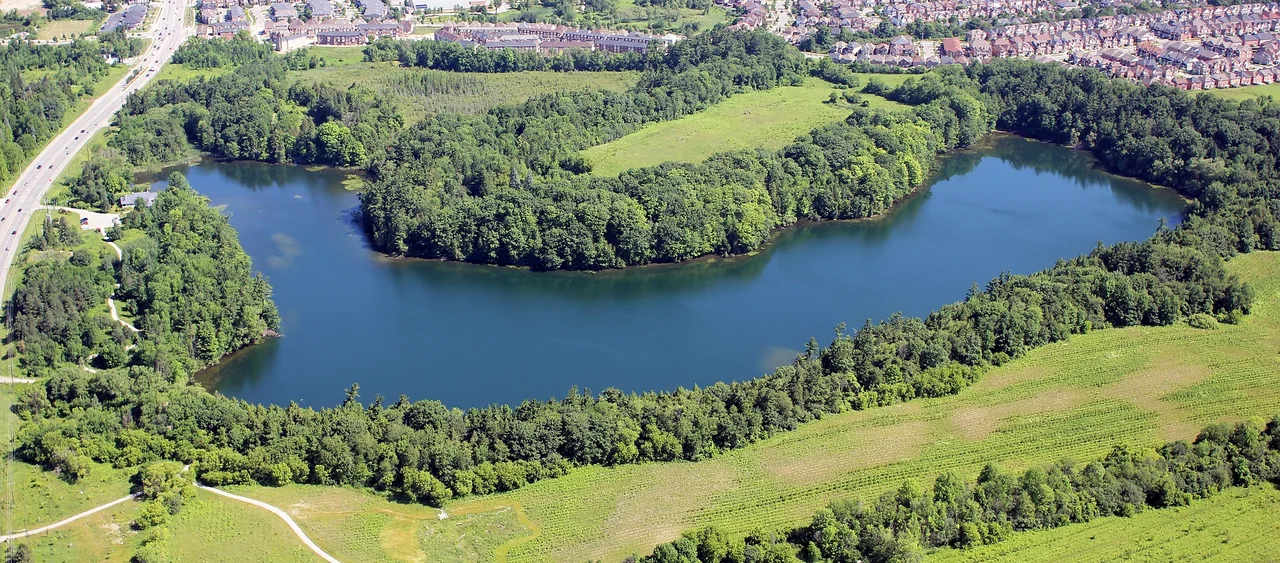
The lake has had a surprisingly lively past
Look at Bond Lake as a quiet conservation landscape and a merry-go-round is not the first thing that comes to mind. It is rather like discovering that your most reserved neighbour once ran a nightclub. Yet the lake’s past includes a dance pavilion, baseball fields and crowds arriving by electric railway for an outing.
The apparent timelessness is deceptive. TRCA's historical account follows a hotel, electric transport and a railway company's pleasure ground. That background changes how a permitted walk feels: the trees and water remain, but the same setting has served very different ideas of a good afternoon. The carousel is gone, and the activities that once attracted paying visitors are mostly prohibited today.
Source: Residents ask about Bond Lake and Saigeon forest history, April 2023
Source: TRCA: Oak Ridges Corridor management plan, 2006, historical resources
First a wayside stop, then a railway outing
TRCA’s 2006 management plan traces the Bond Lake Hotel to 1834, describing a wayside stopping place that developed into a resort with twenty rooms and a ballroom. Later came electric transport. The railway reached Richmond Hill in 1896, and a steam power house at Bond Lake in 1899 supported its northward expansion.
The railway company bought land and created a pleasure ground served by Stop 35. The historical account places the amusement area on the eastern shore of the lake’s northern bay. Visitors could swim, boat, fish, play baseball, ride a carousel or attend concerts and dances. The railway was selling more than a journey: it was supplying somewhere worth going at the other end.
Source: TRCA: Oak Ridges Corridor management plan, 2006, historical resources
A vanished attraction, not a secret permission slip
The management plan noted that little above-ground evidence of that entertainment landscape survived when it was prepared. This is not an abandoned theme park waiting for you to push through a gate. The fascination is in understanding what a now-quiet place once meant, rather than expecting a row of picturesque ruins.
The sharpest change is the rulebook. TRCA now prohibits swimming, boating and canoeing, fishing and ice fishing, fires, barbecues, picnicking, skating, foraging and motorised recreational vehicles at Bond Lake. The activities in the historical paragraph are not present-day visitor advice. A century-old holiday brochure is a poor document to wave at a conservation officer.
Source: TRCA: Oak Ridges Corridor management plan, 2006, historical resources
Source: TRCA: Bond Lake access and current rules
The November catch is on the parking sign
The operator closes Bond Lake parking to the public on Sundays from October to March. That is especially relevant to an autumn visit: a route that looks convenient on a map may not provide the access you expected on the day you choose. Check the operator’s current information before leaving, and use a permitted alternative access point only after confirming it.
There are also no public washrooms or waste bins listed for Bond Lake. Carry out what you bring. The operator identifies a privately controlled area at the trailhead where public access is not permitted. Respect those boundaries and stay on permitted routes. A conservation landscape can be welcoming without every neighbouring space being yours to explore.
Source: TRCA: Bond Lake access and current rules
The pleasure of seeing two places at once
There is an honest trade-off here. Someone seeking a picnic, a paddle or a family attraction with facilities will find the present restrictions disappointing. Someone wanting a quieter nature walk and a local-history puzzle may find that the old story deepens the view. Neither needs to pretend that the conservation reserve is still a resort.
Imagine the railway outing only as far as the evidence allows: people travelled here for music, games and time beside the water. Then return to the current place, with its protected landscape and different obligations. Bond Lake has not always been quiet. Knowing that makes its quiet rather more interesting.
Source: TRCA: Bond Lake access and current rules
Source: TRCA: Oak Ridges Corridor management plan, 2006, historical resources
The railway sold the afternoon as well as the fare
A pleasure ground at the end of a railway was a convincing reason to travel. The Bond Lake account puts transport and entertainment together: a journey led to water, games, dancing and a destination outside the city. The stop number made the outing legible to passengers long before a phone could supply a pin.
That relationship is what makes the lost park more than a collection of quaint attractions. A railway company helped shape how people spent leisure time, while the landscape acquired buildings and uses that later disappeared. Today's conservation rules reflect a different purpose. Read the historical plan to understand the earlier setting, then use current TRCA instructions for the walk itself. The two sources answer different questions, and both are needed to see Bond Lake clearly.
Source: TRCA: Oak Ridges Corridor management plan, 2006, historical resources
Source: TRCA: Bond Lake access and current rules
Places in this story
Bond Lake
12611 Yonge Street, Richmond Hill, ON
TRCA conservation land with kettle-lake scenery and a former amusement-park history.
Source: TRCA: Bond Lake access and current rules
More place details
Source: Compare these places in Resources
Source: Residents ask about Bond Lake and Saigeon forest history, April 2023
Questions people ask
Did Bond Lake really have an amusement park?
Yes. TRCA’s historical management plan describes a railway-linked pleasure ground with a carousel, pavilion and sporting activities.
Source: TRCA: Oak Ridges Corridor management plan, 2006, historical resources
Where was the former amusement area?
The historical plan places it on the eastern shore of the northern bay. It does not describe a surviving visitor attraction.
Source: TRCA: Oak Ridges Corridor management plan, 2006, historical resources
What was Stop 35?
It was the railway stop serving the Bond Lake pleasure ground in the historical account.
Source: TRCA: Oak Ridges Corridor management plan, 2006, historical resources
Can I swim at Bond Lake today?
No. Swimming is prohibited by the current operator.
Source: TRCA: Bond Lake access and current rules
Can I canoe or fish there?
No. Boating, canoeing, fishing and ice fishing are prohibited.
Source: TRCA: Bond Lake access and current rules
Is the parking lot open on Sundays in November?
TRCA closes Bond Lake public parking on Sundays from October to March. Check current access before travelling.
Source: TRCA: Bond Lake access and current rules
Does Bond Lake have public washrooms?
The operator says there are no washroom facilities.
Source: TRCA: Bond Lake access and current rules
Are there waste bins?
The operator says there are none. Take all waste away with you.
Source: TRCA: Bond Lake access and current rules
Can I have a picnic or barbecue?
No. Picnicking, fires and barbecues are among the prohibited activities.
Source: TRCA: Bond Lake access and current rules
Where is the Bond Lake trailhead?
TRCA lists 12611 Yonge Street in Richmond Hill. Follow its access notices and respect private areas near the trailhead.
Something changed? Tell us about a correction.